92%
Visible light transmission
0.7%
Haze, optically clear
99%
UV blocked
Why it stays clear
Same cold glass. Clear view.
When warm, humid air meets cold glass, moisture beads into tiny droplets that scatter light, and the glass turns white. The hydrophilic coat spreads that moisture into one thin, transparent sheet, so you see straight through.


Drag across the window to compare
Confirmed in testing
−5°C
No condensation
−20°C
Frost suppressed
80°C
No loss of function after 30+ days
Applications
From freezers to buildings.
Any glass that fogs.
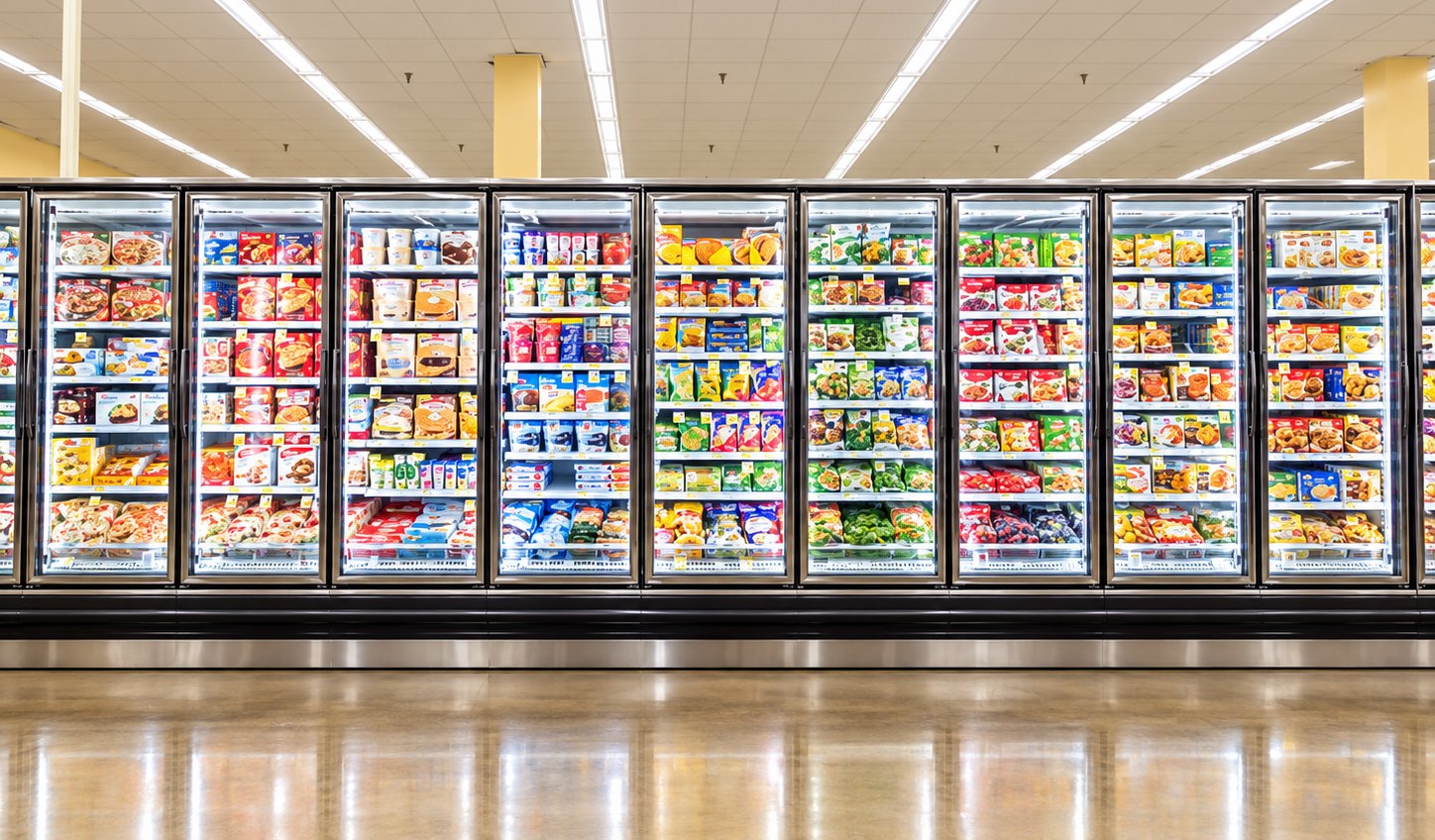
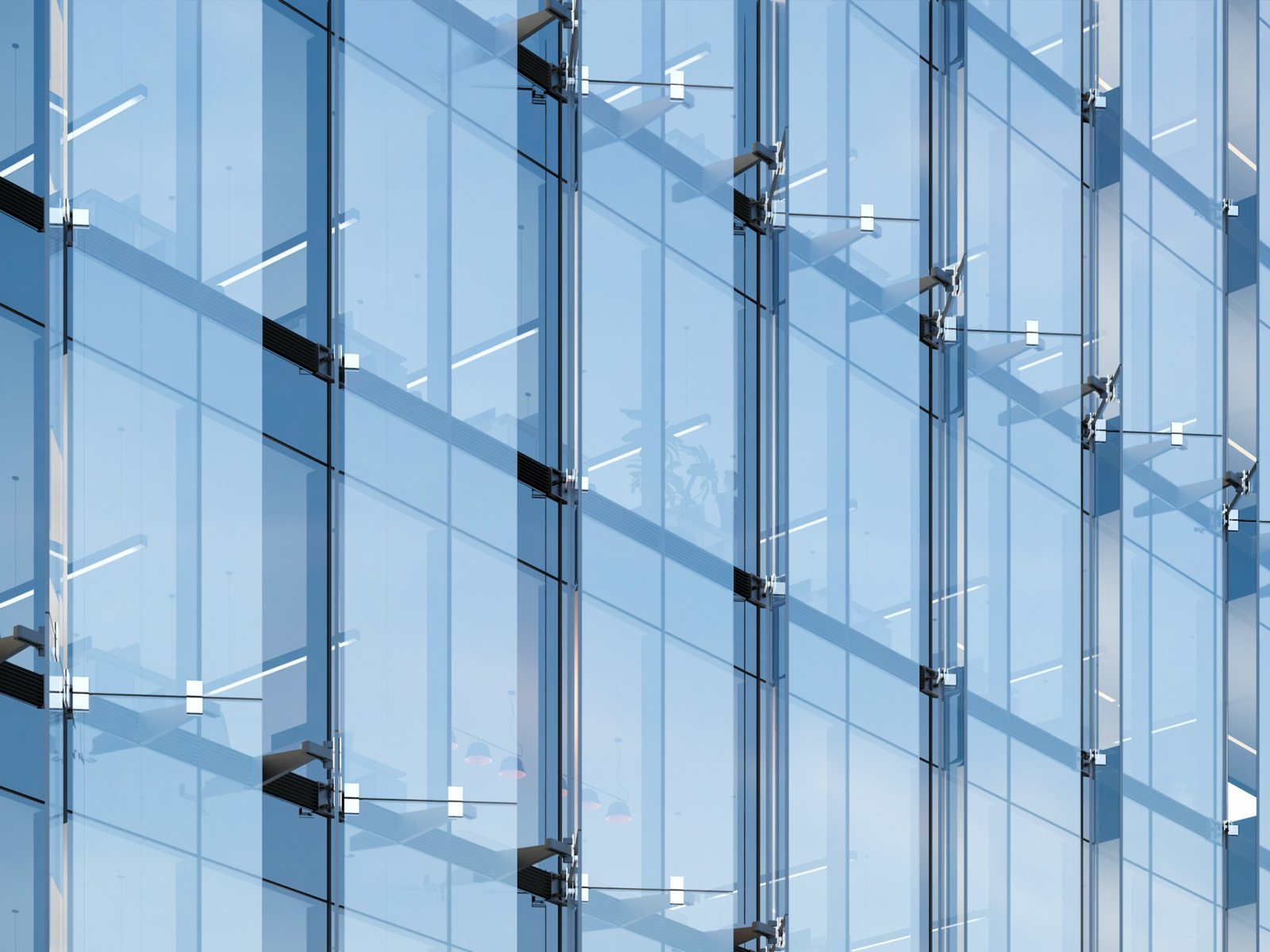
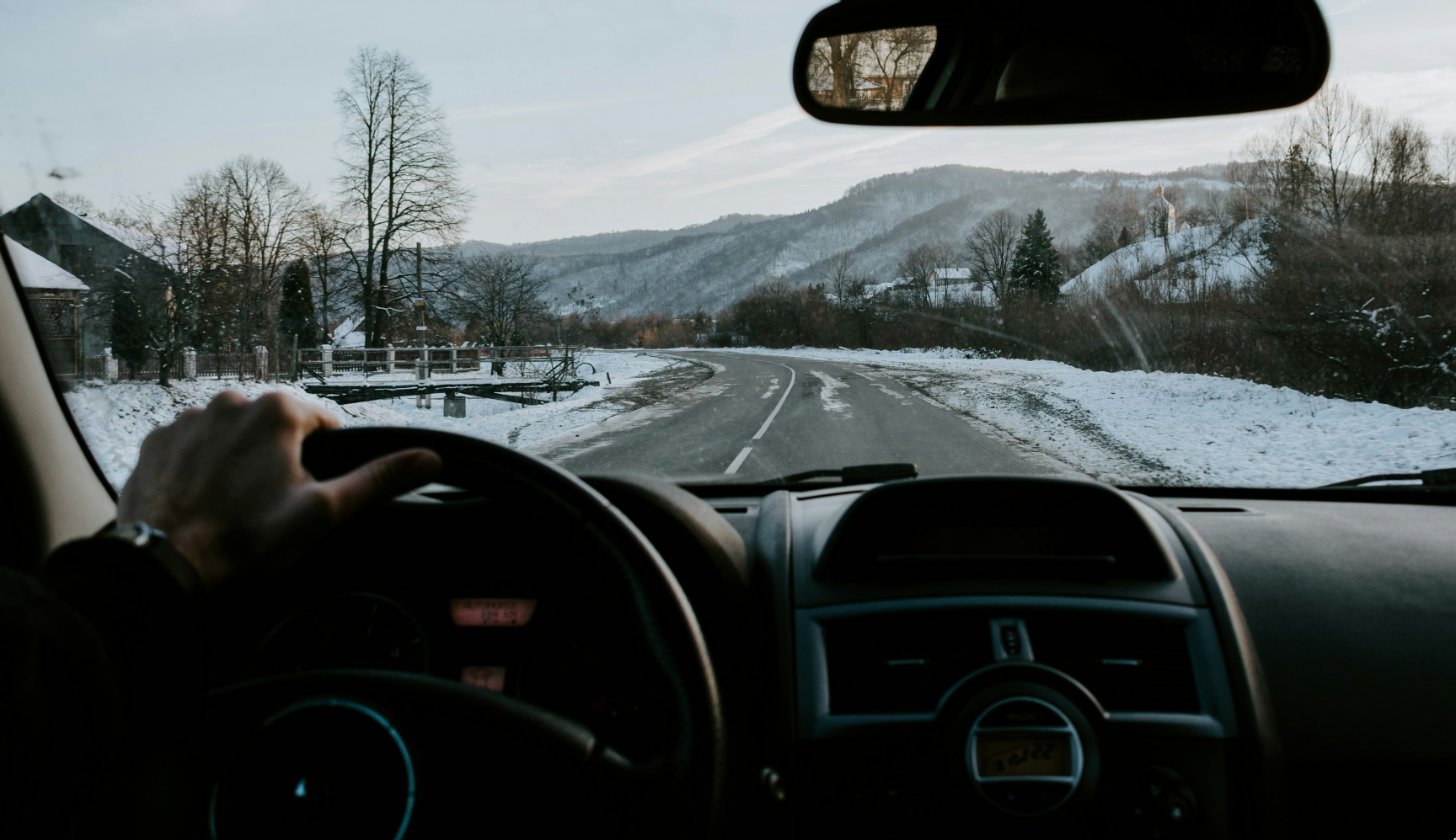
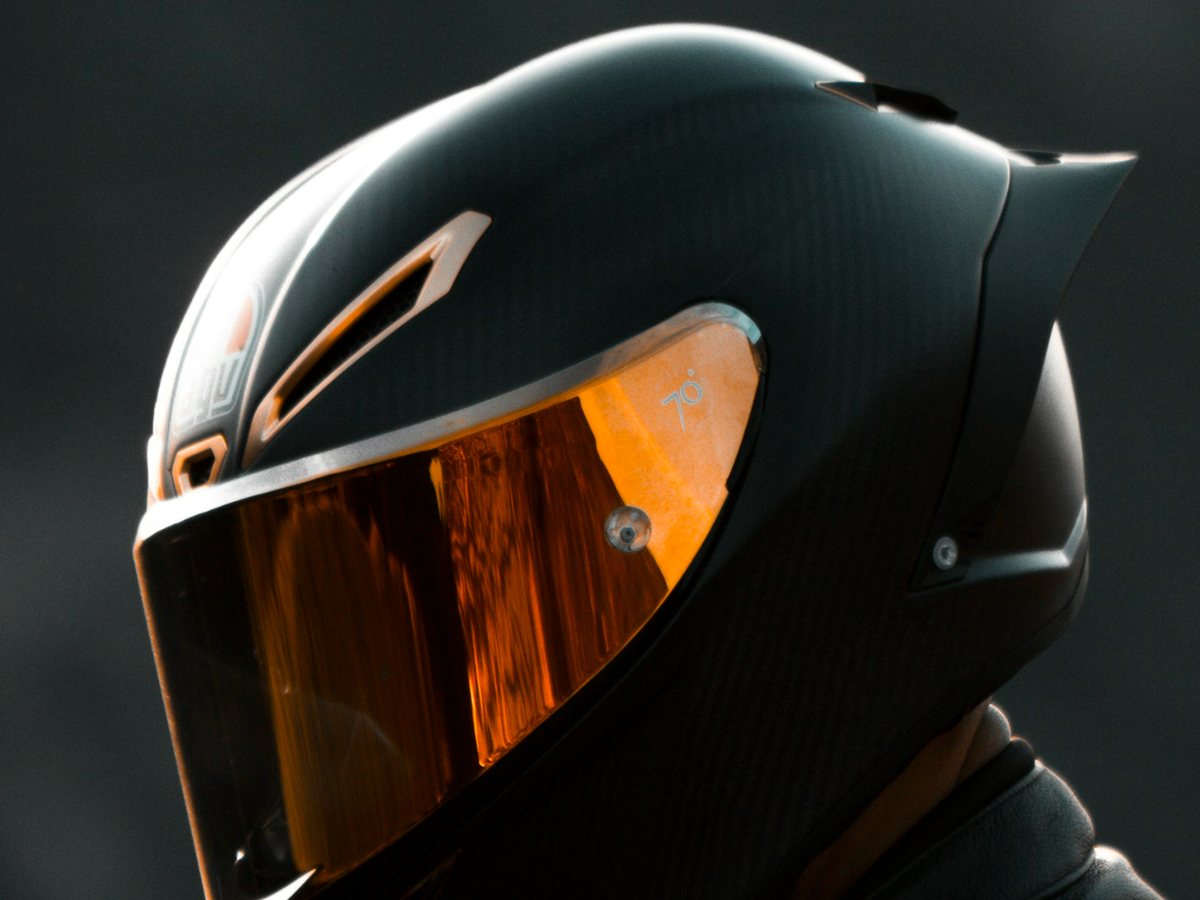
Wherever warm air meets cold glass, the film keeps the view clear: on the shop floor, in buildings, on the road and under the visor.
Beyond Anti-Fog
Clear freezer doors.
Lower power bills.
Freezer doors stay clear because a heater warms the glass all day. The film keeps the glass clear without heat, so the heater can run far less, or switch off.
Today
Door heaters run 24/7 to clear the glass.
With the film
A hydrophilic surface keeps it clear instead.
Result
Heater off or down. Paid back in about 2 months.
Return on investment
2 months.
That's all it takes for the film on a freezer door to pay for itself. Every month after that is savings.
$23
Film, per door
$10.60
Saved every month
$15–23
Max monthly saving
Fast payback · Ongoing energy savings · Lower maintenance costs

Energy saving effect
Up to $23 back per freezer door, every month.
Turn the door heater off or down. The film keeps the glass clear, and with less heat leaking into the cabinet, the compressor works less too.
$11–12/ month
What one door heater costs to run
$8–11/ month
Direct saving with the film
$15–23/ month
Total saving, compressor included
How it adds up, per door
Direct saving. Switch the heater off, or cut its output and run time by 70% or more with a smart controller. That's $8–11 per door, per month, from day one.
Compressor saving. The heater also pushes heat into the −20°C cabinet, so the compressor runs more often and for longer to pull it back down. Take that heat away and the compressor eases off, adding another 0.5–1× the direct saving. Up to $15–23 a month in total.
Per glass door of a −20°C display freezer. USD at about ₩1,325 = $1 (27 Oct 2026).
Technology & specifications
What's inside the film.
And how it performs.
First the layer build, then the full specifications: optical data, film, performance and supply.
Superior Technology
Hydrophilic coating, layer by layer.
An 11 µm UV-cured hydrophilic coating is bonded to optical-grade PET. Instead of beading into droplets, moisture spreads into a clear, even sheet, so glass stays transparent without heat.
Optically clear: 92% light transmission, 0.7% haze.
UV blocking: a dedicated layer stops 99% of UV.
Hard-coated: HB pencil hardness, self-cleaning surface.
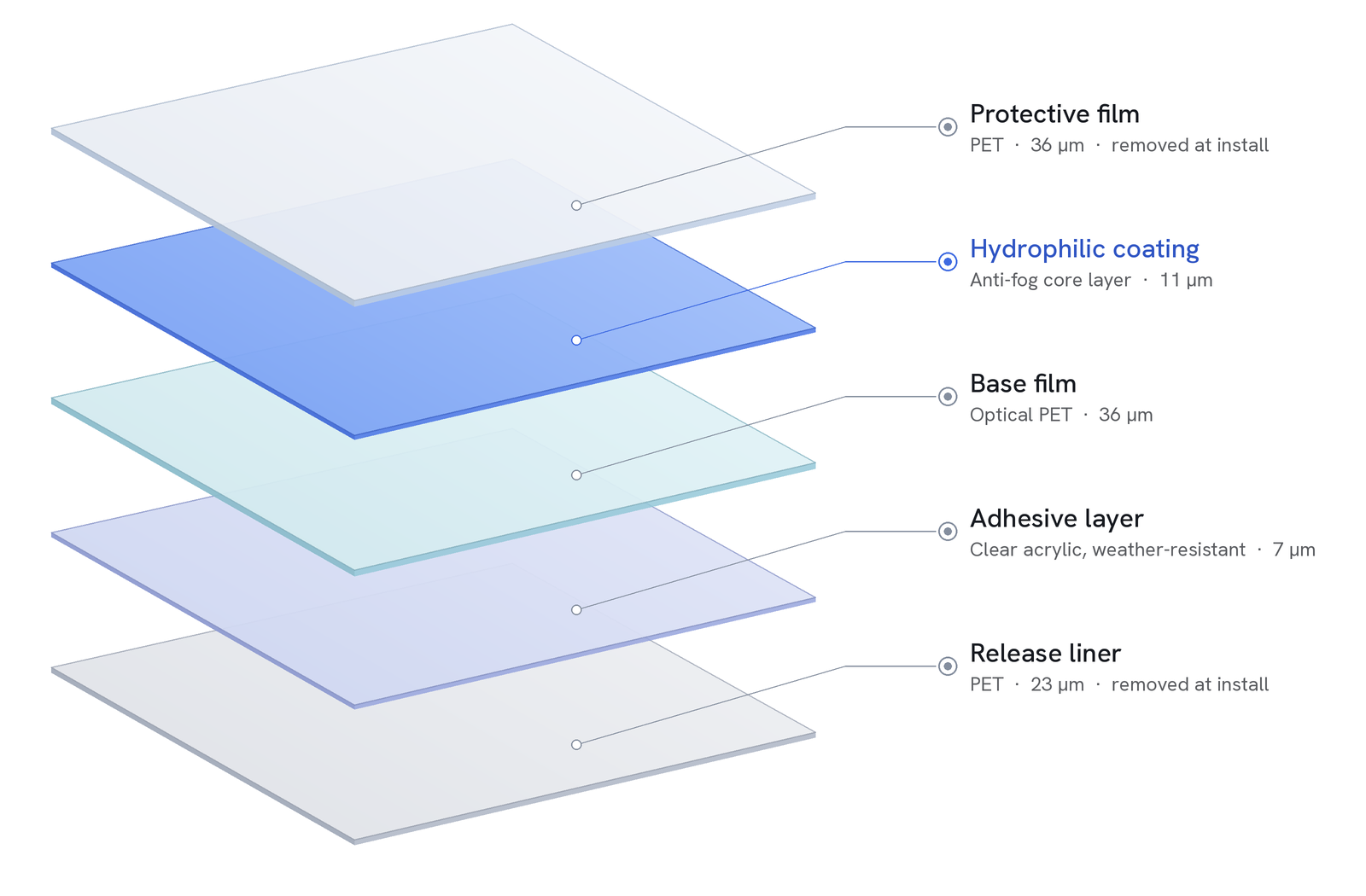
Total build 113 µm
Anti-Fog/Frost Film specifications
One clear film for display freezers, showcases, building windows and vehicles: anti-fog, anti-frost, anti-condensation and UV blocking.
Optical measurement
With 92% transmittance and 0.7% haze, the film suits building windows, vehicles and display freezers.
Film
Product
LUNOX Anti-Fog/Frost Film
Film type
UV-curable hydrophilic functional coating film
Base film
PET, 36 µm (113 µm total build)
Adhesive
Acrylic pressure-sensitive
Appearance
Transparent / clear
Coating adhesion
5B
Performance
Functions
Anti-fog, anti-frost, anti-condensation, UV blocking (dedicated layer), self-cleaning hard coat
Heat resistance
80°C chamber test, 30+ days, no loss of function
Low temperature
Frost suppressed at −20°C
Condensation
No condensation at −5°C
Application
Vehicles (front, side, rear glass), building glass, display freezers
Supply
Standard roll
1,524 mm × 30 m
Minimum order
100 Rolls
Lead time
Within 30 days of order
Packaging
1 roll per box (paper core & box), 100 rolls per pallet
Custom
Slitting, processing and roll supply to your specs
Start with a sample roll.
Test it on your own glass. Order samples, or talk to us about OEM and white-label supply.